A mediation on audio recordings.
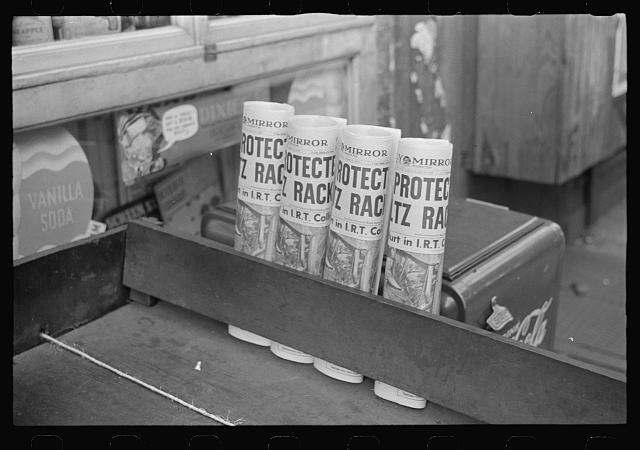
Photo by Walker Evans. August 23, 1938
Suddenly, Bob Moses, our leader, looked and me, with my machine at my side. He smiled and asked: “Is this oral history?” I didn’t know how to answer. I finally came up with “No.” I was asked to explain myself. I spoke of the systematic stories, the life histories of individuals (in the tradition of, say, Oscar Lewis, the anthropologist) which at the time constituted oral history in my mind. Well, what about my tape-recorded “material” – how to classify it? I said that I used such tapes to help me understand what I was hearing and seeing in connection with my work as a “participant observer,” work mainly done with SNCC. Well, how did I use the taps, and what would I do with them down the line: whose were they?
Coles, Doing Documentary Work (35-36)
I’ve been meditating on this passage from Robert Coles’s book since I read it over the weekend. This idea, more so than anything else Coles has written about thus far, resonated with me and felt relatable to the work I’ve already done. I’ve been doing journalism for school publications for three years now, two in high school and last year with the Muhlenberg Weekly. I have no intention of stopping, and it’s something I am interested in pursuing professionally. Audio recordings have been central to my process – they’re how I ensure that I am accurately documenting the quotes and experiences of the others I report on. Earlier today, I (along with my classmates) was encouraged by my professor to audio record absolutely everything when I am preparing to report something for my Intro to Narrative Journalism class. I have audio recordings from the assignments I worked on this week, both for that class and the Weekly. In my traditional journalism experience, I have never considered ownership of these recordings. They sit, mostly untitled, in my Voice Memos app, taking up my phone storage once I’ve written the article they pertain to. Before reading this chapter, I mentally regarded them as useless- most of the words they contained went on to be recorded on paper. But Coles inspired me to think about them as something bigger. This is a tiny piece of someone else’s world. Sometimes they were complete strangers, sometimes my closest friends. But, (and this is morbid) if the person whom I wrote a profile on last year were to suddenly drop dead, I have a 15-minute recording of her talking about her proudest achievements and best memories from college, and that’s something that ought to be preserved. Even if she lives a long and happy life, I have a document of one tiny piece of her life, something that should be retained as well. But what do I do with these recordings? I keep them and have them dating back to 2020, well before I began to consider pursuing this as a career. I’ve completely lost touch with the people in those recordings, but here I am, in possession of a document on them. Perhaps there is no answer to this question, perhaps the people in these recordings don’t want their own access to them. But for now, they will stay where they are, collecting internet dust, maybe for the rest of time.
